
Summerville, SC · Garage Door Service
What 1980s and 90s Garage Doors in Summerville Are Dealing With
Most Summerville houses date from 1977-2005. Here's what to check on garage doors from that era, how the mild coastal climate wears them, and what repairs run
- Repairs & new doors
- Springs & openers
- Serving 5 nearby communities
What to Check
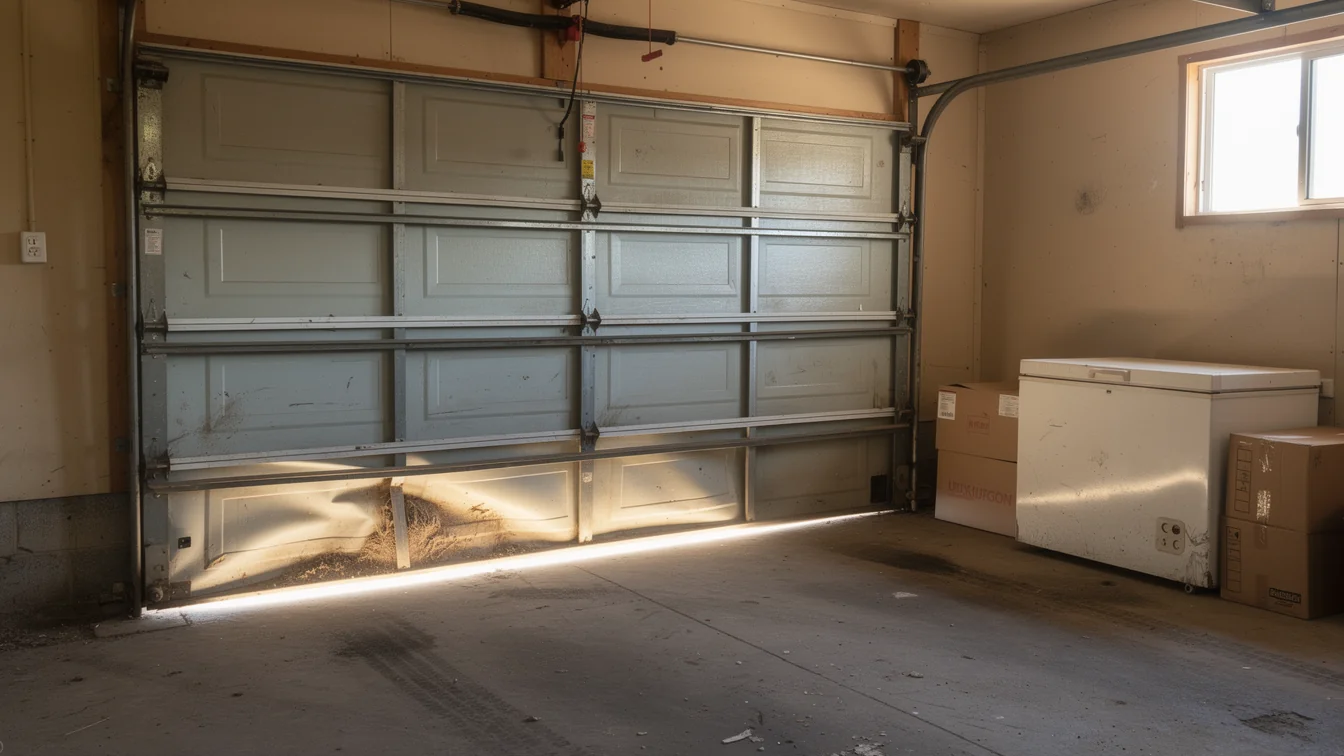
Most houses in the Summerville service area went up between 1977 and 2005, with the median build year sitting around 1992. That means a lot of original hardware: single-piece or early sectional doors, steel tracks that have never been swapped, and openers that predate today's safety sensor standards. Across the eight named areas that make up this stock, the lean is heavily toward 1980s and 90s construction, which puts most of these doors somewhere between 25 and 45 years old.
Start with the springs. A torsion spring rated for 10,000 cycles on a door installed in 1988 has likely already logged more openings than that if the household uses the garage daily. Look for a flattened coil, gaps between winds, or rust streaks running down from the spring to the floor.
Check the track bolts next. Original installs from this era often used lag bolts into the jamb rather than the through-bolt hardware that's standard now, and those loosen over three-plus decades of thermal movement. Pull on the bottom bracket by hand with the door closed. Any wobble at the track means it's time for a look, not a DIY tighten, since a loose track under spring tension can let a cable jump.
What the Weather Here Does to It
Summerville sits in a mild climate band with occasional freezes rather than the hard winters that crack steel panels and seize openers further inland. That's good news for the door itself, but it doesn't mean the hardware is off the hook.
The freeze-thaw cycle here is shallow but it still happens, and it hits hardest on doors that were never weatherstripped properly to begin with, which describes a fair share of the 1980s and 90s stock. A vinyl bottom seal that's hardened from decades of heat exposure will crack the first time it dips near freezing, letting water track under the door and rust the bottom panel from the inside out.
Humidity does more day-to-day damage than cold does in this climate band. Steel tracks and hinges that spend most of the year in warm, damp air corrode slower than they would up north, but they corrode steadier, and a 30-year-old track usually shows pitting along the roller channel even without a single hard freeze on record. Lubrication that would last a season in a drier climate gums up faster here. If your rollers squeal within a few months of the last service, that's the climate talking, not a bad lube job.
The Problem
The real issue in Summerville isn't that these doors are broken. It's that they're original to houses built 20 to 45 years ago, and the parts that match them aren't the parts on the shelf anymore. A torsion spring sized for a door hung in 1992 often used a wire gauge and wind length that newer manufacturers don't stock as a direct match, which means a repair on an older door sometimes takes longer to source than the same repair on a five-year-old one.
Openers from this era are the other half of it. Anything installed before the mid-1990s predates the photo-eye sensor requirement, and a surprising number of those units are still the original motor, just because they never fully failed. When one finally does go, it's rarely a simple swap, since newer openers expect sensor brackets and wiring that the old frame was never built with.
Here's the honest limit: if a door from this era needs a new opener, a new bottom panel, and track work all at once, replacement is usually the better call over patching three separate systems built to three different standards. We'll tell you when that line gets crossed instead of running up a repair bill on a door that's past the point of it being worth it.
What You Pay
We don't have a flat-rate number to quote you here without seeing the door, and anyone who gives you one over the phone for a 30-year-old torsion setup sight unseen is guessing. What drives the cost on houses in this build range is usually parts availability, not labor. A standard spring swap on a door from the 2000s is a fast, predictable job. A spring or track repair on a door built closer to 1980, with non-standard bracket spacing or a wind-length that needs ordering in, takes longer and costs more because of that wait, not because the work itself is harder.
Summerville's median household income sits at $80,223, and across the 39,270 households in the service area, 21,948 are owner-occupied houses - a lot of them carrying the original door from construction. That's a long enough ownership runway that most owners end up weighing a repair against a full replacement at some point, especially once the opener and the spring both need attention in the same visit. We'll walk you through both numbers before we touch anything, and recommend the one that makes sense for how much longer you plan to own the door.
Frequently asked questions
My house was built in the early 90s. Is the original garage door spring still safe to use?
A torsion spring rated for roughly 10,000 cycles can last well past 30 years in light-use households, but most in the Summerville area built around 1992 are at or past that count by now. Rust along the coil or visible gaps between winds mean it's due, regardless of how it still looks from across the garage.
Does Summerville's climate actually damage garage doors much?
The occasional freeze here does less damage than the steady humidity does. Steel tracks and hardware corrode gradually in warm, damp air year-round, which is why a 30-year-old track in this area usually shows pitting even without a hard winter on record.
Should I repair or replace a door from the 1980s or 90s?
It depends what's failing. A spring or cable swap on its own is usually worth repairing. If the opener, track, and bottom panel all need work at the same time, replacement is often the better value since you're not paying three separate repair bills on parts built to three different eras of hardware.
Why does a repair on an older door take longer to schedule?
Parts matching the original hardware on a door from the late 70s through the 90s aren't always stocked the way current parts are. A standard spring is fast. A spring with an older wind-length or bracket spacing sometimes needs ordering in, which adds a few days before the job is done.
Related garage door services in Summerville
More garage door guides
Book garage door service in Summerville
Call now or request a quote - tell us what the door is doing and where you are.