Summerville, SC · Garage Door Service
Is Your Summerville Garage Door Worth Repairing, or Done
Summerville homes mostly date 1977-2005. Here's how to tell if your original door and opener are worth repairing or if the age and parts finally call it.
- Repairs & new doors
- Springs & openers
- Serving 5 nearby communities
What to Check
Most houses across this area went up between 1977 and 2005, with a heavy concentration from the 1980s and 90s. That puts a lot of original doors somewhere between 20 and 45 years old right now, and that range matters because it's the window where a door either keeps earning its keep or starts costing more in parts than it's worth replacing.
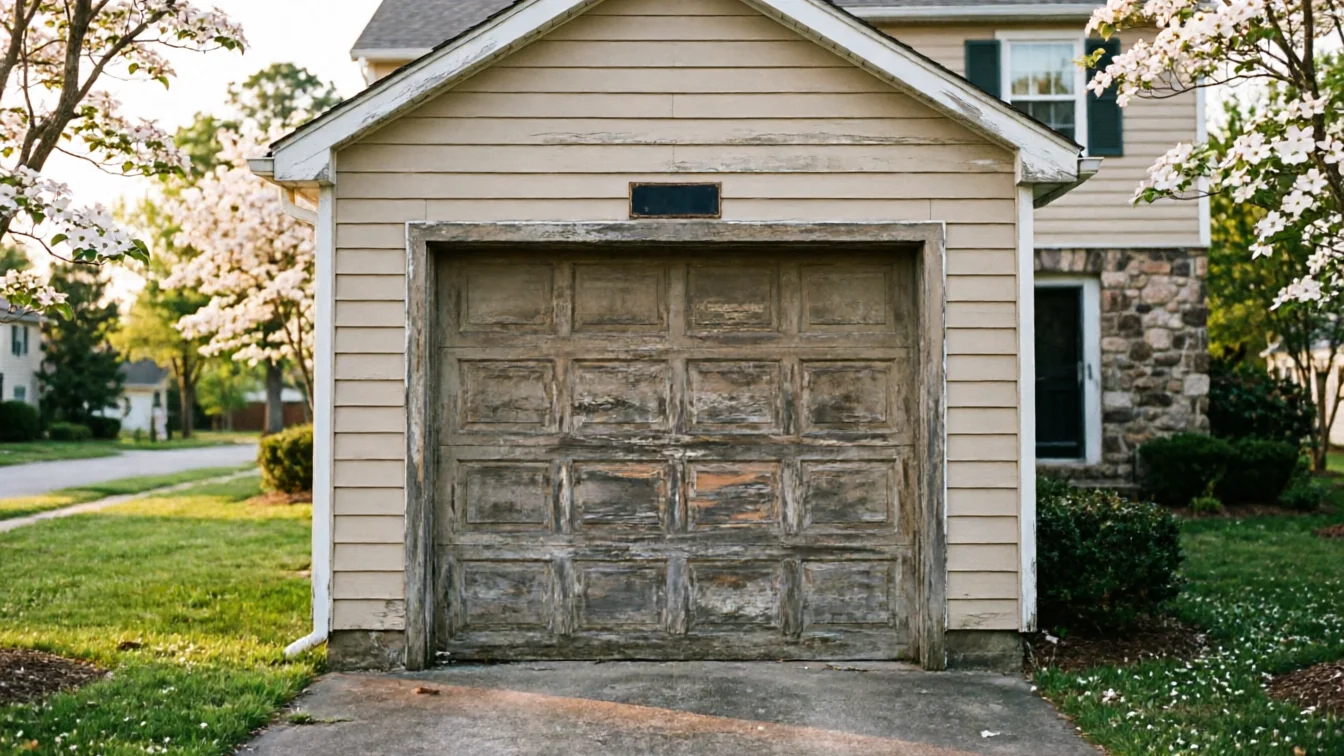
Start with the springs. If the door is original to a house from that era, it's almost certainly still running a single torsion spring or an extension spring setup, neither of which was built to last this long without at least one replacement. Check the bottom panel for rust blooming along the seam, check the rollers for flat spots, and check whether the opener still has a chain drive with visible wear on the sprocket. A door that's had the spring swapped once already and still tracks straight is worth fixing almost every time. A door that's never had a spring touched and is already sagging on one side is telling you it's past due.
We don't repaint or refinish wood-look steel doors - that's outside what we do, and by the time the finish is failing the steel underneath usually is too.
What the Weather Here Does to It
The climate band here is mild with the occasional freeze, which is a different kind of wear than what a door sees further inland or up north. You don't get the hard freeze-thaw cycling that snaps brittle hardware, but you do get steady humidity that works on steel and wood in a slower, quieter way.
On a door built in the 80s or 90s, that usually shows up as rust starting at the bottom panel seam where water sits after rain, and as hinges that have pitted enough to bind rather than swing. Wood-composite doors from that same build era tend to swell at the bottom corners during humid stretches and then shrink back when it's dry, which loosens the fasteners holding the bottom bracket over years of that cycle. None of this is dramatic weather damage - nothing is getting torn off a track in a storm - it's just steady wear that adds up differently than it would somewhere with real winters.
The Problem
The actual problem with older doors here isn't usually the door panel itself. Steel holds up fine in this climate. It's that the doors going up in that 1977-2005 building wave came with hardware that was standard for the time and is now mismatched with what's stocked on the truck. Torsion springs wound to specs from 30 years ago, drums sized for a cable gauge nobody runs anymore, openers with logic boards that have been out of production for over a decade.
That mismatch is what turns a simple fix into a bigger one. A broken spring on its own is a straightforward repair. A broken spring on a door where the drums, cables, and track are all original and worn past spec means we're not just replacing one part, we're bringing the whole system back to something safe to operate. That's the point where it's worth asking whether you're fixing a door or slowly rebuilding one piece at a time.
What You Pay
We don't post a flat price here because what a repair costs depends entirely on what's actually wrong, and on a door built in the 80s or 90s that can mean one spring or it can mean spring, cables, and rollers all at once. What we can tell you is how we decide: if the opener motor and logic board are sound and the track is straight, we fix what's broken and leave the rest. If the door has multiple original parts failing at the same time, we'll say so plainly and let you decide whether patching it again makes sense or whether this is the year it gets replaced.
Given the age of housing stock across this service area, we see that decision point a lot more often than we see a door that just needs one quick part.
Frequently asked questions
My house was built in the 90s and the door has never been serviced. Is that a problem?
It can be. A torsion spring from that era was rated for a certain number of cycles, and most have hit or passed that count by now even without obvious failure. We'd want to look at the spring, cables, and rollers together rather than wait for a snap, since a worn spring under tension is the most common emergency call we get on doors this age.
Does the humidity here actually damage garage doors?
Not dramatically, but steadily. We don't get hard freeze-thaw cracking since the climate here is mild with only occasional freeze, but steady humidity rusts bottom panel seams and hinges over years and swells wood-composite doors at the corners. On a door built in the 1980s or 90s, that slow wear is usually further along than homeowners expect.
Is it ever better to just replace instead of repair?
Yes, usually once multiple original parts are failing at once rather than a single clean break. If the spring, cables, and rollers are all original and worn, replacing piece by piece can cost more over time than putting in a new door built to current hardware standards. We'll tell you straight which side of that line your door is on.
Related garage door services in Summerville
More garage door guides
Book garage door service in Summerville
Call now or request a quote - tell us what the door is doing and where you are.